TL;DR
A portfolio pipeline rollup is only as trustworthy as the account, contact, opportunity and activity relationships inside each portfolio company's CRM. The sponsor sees totals and coverage scores, but the errors live three layers down, in a champion who is not attached to the deal, a call logged against the wrong account, or the same opportunity entered twice.
Here's what you'll learn in this article:
- What a portfolio pipeline rollup is, and why it differs from the fund's deal-flow pipeline
- How three small relationship errors in one portco change what the firm sees in pipeline review
- A minimum shared relationship model that works across different CRMs and sales processes
- Where an intelligence layer such as GenieCRM helps, and where governance still has to come first
A portfolio pipeline rollup is only comparable when relationship records mean the same thing
You are comparing win rates and coverage across five portcos, and you have no idea whether "account" means the same thing in any two of them.
A portfolio pipeline rollup is a consolidated view of the operating pipeline across a private equity firm's portfolio companies: their opportunities, stages, owners, stakeholders and activity. It is different from the fund's investment pipeline, which tracks companies the firm might buy. Private equity portfolio pipeline reporting lives or dies on the first one, and the first one is built entirely from portco CRM records the operating team did not create.
Every rollup number rests on relationships. An opportunity belongs to an account. Contacts belong to accounts and, separately, play roles on opportunities. Activities (calls, emails, meetings) attach to some combination of all three. When those links are right, you can ask useful questions across the portfolio. When they are wrong, the report still renders. It just answers a different question than the one you asked.
A shared dashboard does not make records comparable. If one portco treats each billing entity as an account and another treats the parent company as the account, their "average deal size per account" numbers are not measuring the same thing. No visualization layer fixes that after the fact.
On a GTM Engine call in June 2026, a prospect looking at 38,000 company records in their own CRM described the problem in plain terms: "Some of you guys are the same. Some of you are related. Some of you are ghosts." That was a single company, not a PE portfolio. Now picture the sponsor stacking several of those databases on top of each other and calling the result a portfolio view.
Three small relationship errors in one portco distort the firm-level view
A pipeline review can look healthy at the firm level while the underlying deal is single-threaded, stale and counted twice.
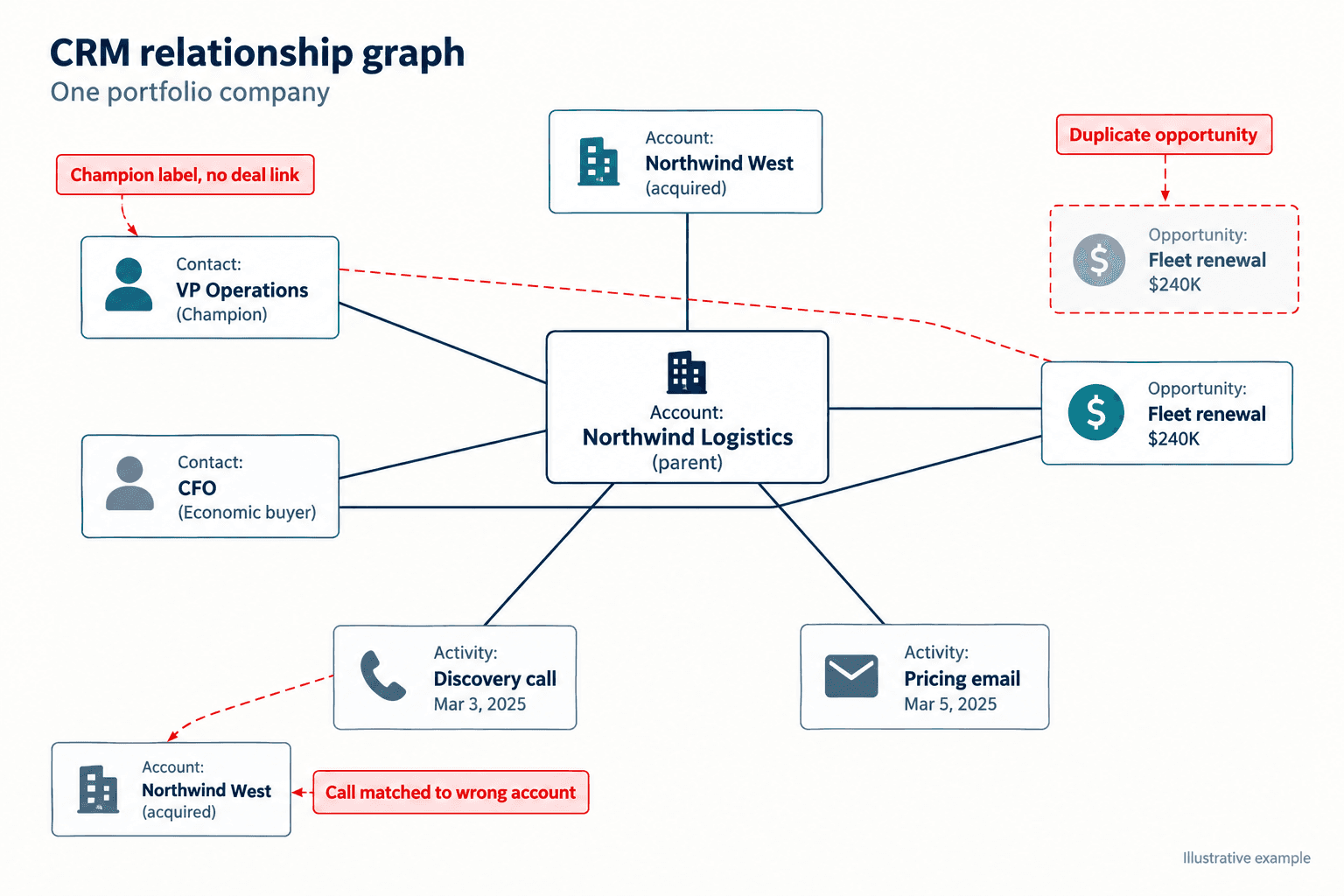
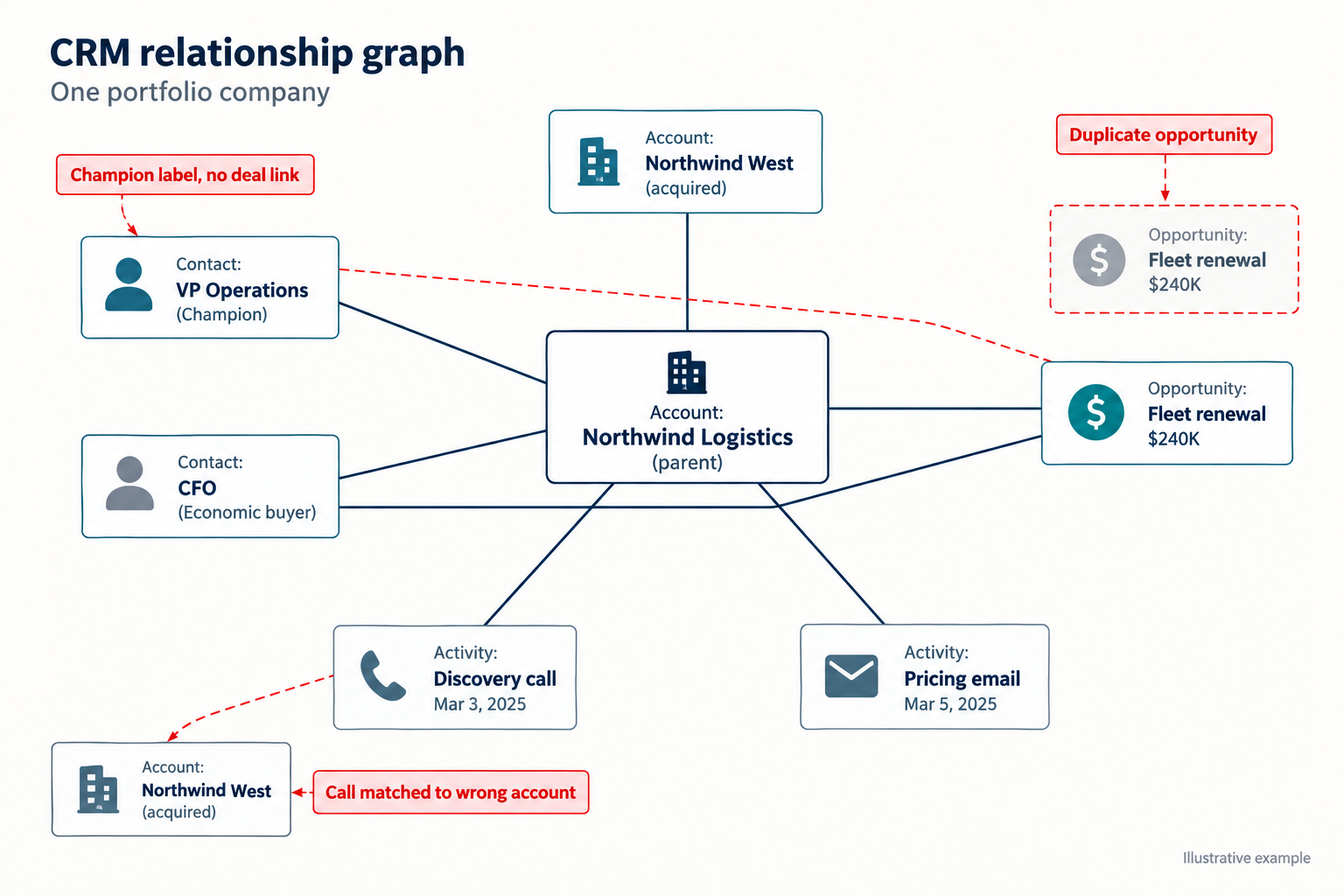
The cleanest way to see the mechanism is one illustrative portco. Call it Northwind Logistics. It has a parent account, an acquired subsidiary (Northwind West), a VP of Operations tagged as the champion, a CFO tagged as the economic buyer, and a $240K fleet renewal opportunity. Every name and number here is invented for illustration.
A champion label without a deal relationship
The VP of Operations carries a "Champion" value on the contact record but has no contact role on the fleet renewal opportunity. The contact belongs to the account; the role on the deal was never created. A firm-level stakeholder coverage report that counts contact roles per opportunity sees one stakeholder (the CFO) and flags the deal as single-threaded. A report that counts champion-tagged contacts per account sees a champion and calls the deal covered. Same data, opposite conclusions, depending on which relationship the report trusts.
A call matched to the wrong account
A discovery call with the VP of Operations gets logged against Northwind West because the attendee's email domain matched the subsidiary. The parent account, where the opportunity lives, now shows no recent activity. In pipeline review the $240K renewal looks stale, and Northwind West looks like an active account with no opportunity attached. One misrouted activity produces two false signals.
A duplicate opportunity
A rep at the acquired business re-creates the renewal under Northwind West after the tuck-in. Now the portco's pipeline carries $480K where $240K exists. The duplicate also has no activity and never advances. If the portco measures stage velocity as average days an open opportunity sits in its current stage, the frozen duplicate keeps adding days to that average every week, so the portco looks slower than its reps are. Neither record is obviously wrong when you look at it alone.
Record-level errors compound as they roll up to the sponsor
The operating partner never sees the broken link. They see a portco that looks under-covered, over-pipelined or slow, and they act on it.
Rollups hide record-level errors because each layer of aggregation removes the context someone would need to catch the mistake. A RevOps lead inside Northwind might spot the duplicate in a deal review. By the time that portco's pipeline is summed with four others in a quarterly operating review, the $240K is just part of a coverage ratio.
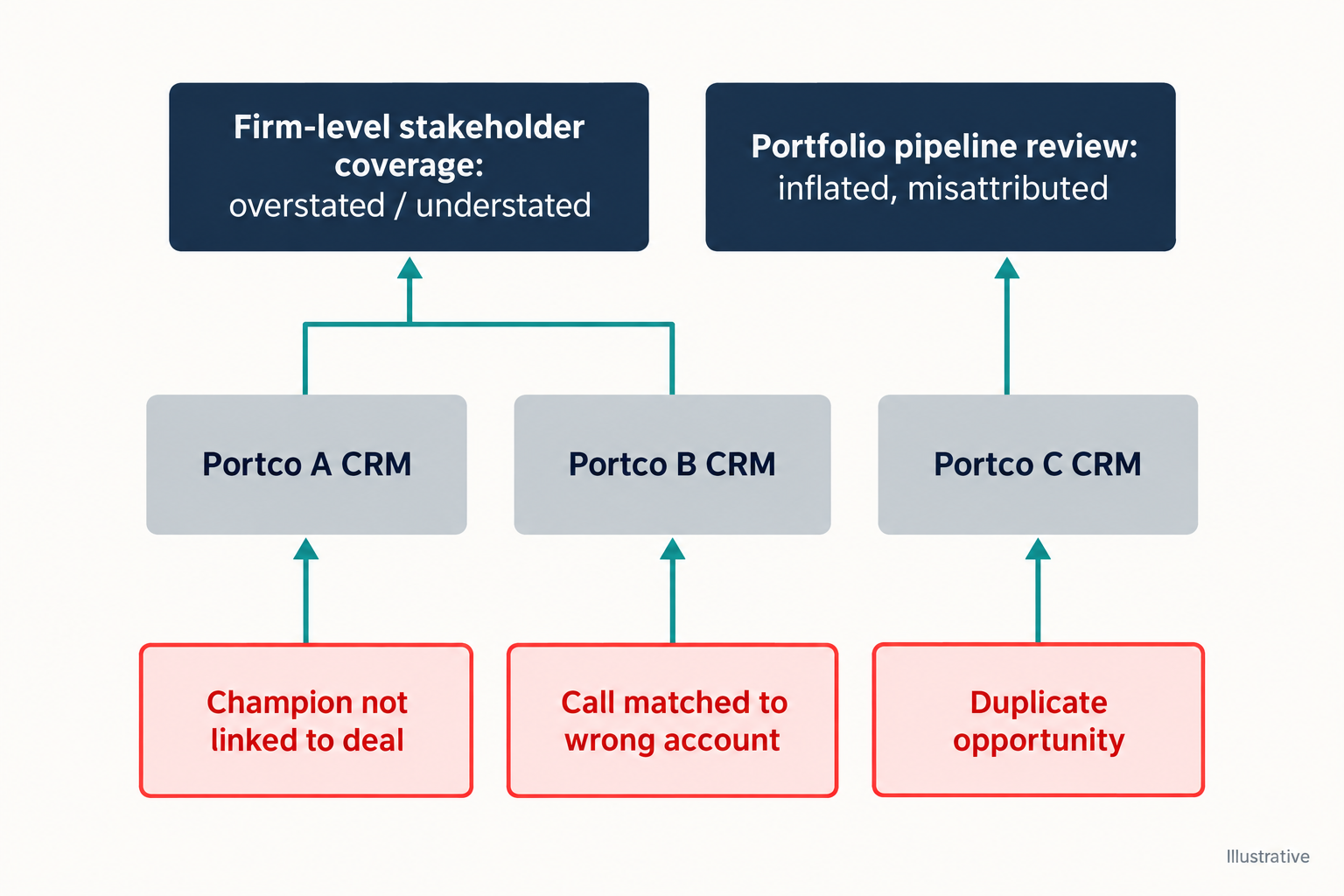
The damage shows up in specific firm-level decisions. Stakeholder coverage gets overstated or understated, so the firm pushes a multithreading play into the wrong portco. Pipeline coverage gets inflated, so a forecast gap surfaces a quarter late. Activity gets misattributed, so the account the portco should prioritize looks quiet and a dormant one looks hot.
Acquisitions make all of this worse. On an October 2026 GTM Engine call, one prospect described what tuck-ins left behind: "what they end up doing is having five separate companies in one." That is one company's description. For a sponsor running a buy-and-build thesis, plan for it as the starting state of the CRM anyway, because every add-on brings its own account hierarchy, naming habits and duplicate contacts.
A rollup does not average out bad relationships. It inherits them, then hides where they came from.
Separate relationship errors from definition errors before you start fixing anything. A relationship error is a wrong or missing link between records (the call on the wrong account). A definition error is a disagreement about what a field means (one portco's "Stage 3" is another's "Stage 5"). Both distort comparisons, but they need different owners and different fixes, and mixing them produces months of meetings that resolve neither.
A common relationship model works across different portfolio CRMs
You do not need every portco on the same CRM. You need every portco able to answer the same five relationship questions the same way.
A common relationship model is a short, sponsor-level agreement on what each core record means and how records connect, mapped onto whatever CRM each portco already runs. Salesforce, HubSpot and the rest name and structure these objects differently, and sales processes vary by motion. The goal is a translation layer, not identical schemas.
The table below is a proposed starting point for an operating standard, not a customer-validated benchmark. Pressure-test it with each portco's RevOps lead before adopting it.
| Record or relationship | Shared definition | Rule the rollup depends on |
|---|---|---|
| Account | The legal or operating entity that buys, with an explicit parent where one exists | Acquired entities link to a parent with an effective date; no orphaned subsidiaries |
| Contact | A person at one account, with a current title and status | Stale or departed contacts are marked, not deleted, so history survives |
| Opportunity | One potential transaction with one owner, amount, stage and close date | One opportunity per transaction; duplicates merged inside the portco by a named owner |
| Contact role on opportunity | The person's role in this specific deal (champion, economic buyer, evaluator) | Coverage reports count roles on the deal, not labels on the contact |
| Activity | A call, email or meeting with a timestamp and participants | Attached to the opportunity and account the conversation was about, not just the email domain |
Notice the fourth row. A label on a contact and a relationship on a deal are different facts. In a portfolio, that distinction decides whether a stakeholder coverage comparison means anything at all.
Each row also needs an owner and a source of truth. If the portco's CRM is the system of record for opportunities, the rollup reads from it and never writes conflicting values back. If two systems disagree about a contact's title, the standard says which one wins.
Shared contacts do not mean shared permission
Portfolios with overlapping customer bases will find the same person in two portcos' CRMs. The relationship model should record that overlap for analysis. It should not merge those contacts across companies, and it does not authorize one portco to reach out on the strength of another portco's relationship. Those are separate legal and commercial decisions, made deliberately, with each company's data agreements in view.
Centralize definitions and leave execution with portfolio companies
A CRM mandate from the sponsor feels like control, and the announcement alone can stop reps from entering data before the new system exists.
The governance split that holds up is simple to describe. The firm owns definitions, required fields, relationship rules and reporting cadence. Each portco owns its CRM, its workflows and the day-to-day work of keeping records accurate. Portcos map their records to the shared model; they do not rebuild their sales process around the sponsor's dashboard.
Forced migrations carry real adoption risk. On a GTM Engine call in October 2026, a prospect put it bluntly: "the minute you tell a sales rep, hey, we're killing salesforce, they're not going to go in it anymore." That is one company's account, not a measured rate. If it holds in your portco, data entry stops before the new system is ready, and the gap lands in the window when the sponsor wants clean baseline numbers.
Reps resist change for understandable reasons. Another prospect, on an October 2026 call, summarized their team's posture as "Most of them just don't want to change." A standard that asks portcos to add a parent-account field and a contact-role habit is a far smaller ask than a new CRM, and a far more likely one to stick.
Validate the rollup before using it in an operating review
If you cannot trace a rollup number back to the records behind it, you are presenting a guess with a chart attached.
Before a portfolio pipeline rollup goes into a board deck or an operating review, run a validation pass ten business days ahead. The portco's RevOps lead owns the checks and the fixes; the firm's operating analyst reviews the results. The reporting window is the last 90 days. The thresholds below are proposed starting points, not benchmarks:
- Pull the ten largest open opportunities by amount. Each needs the right account, an owner and at least one contact role. Two or more failures means the coverage numbers stay out of the deck.
- List every acquired entity. Each needs a parent link, and no transaction can appear under both parent and child. Any duplicate is merged before the review.
- Pull the last 20 logged activities on those ten deals. Confirm each sits on the account and opportunity actually discussed. Three or more misroutes means activity metrics get footnoted.
- Flag contacts on those deals with outdated titles or no activity in the window. Update or mark them within five business days.
- Map each local stage to the shared model and document every exception before the rollup is published.
AI analysis does not rescue this step. On an October 2026 call, a prospect described running analysis over their CRM and getting back "nonsense" because the data was "disorganized or incomplete." Another, in August 2026, said Salesforce was their source of truth for compensation while "the fields are half empty." Both were single accounts, not portfolio benchmarks. The lesson travels anyway: a model summarizing broken relationships produces fluent, confident, wrong answers.
An intelligence layer keeps relationships current but cannot set governance for you
Automation reduces the manual upkeep that lets relationships decay. It does not decide what an account is.
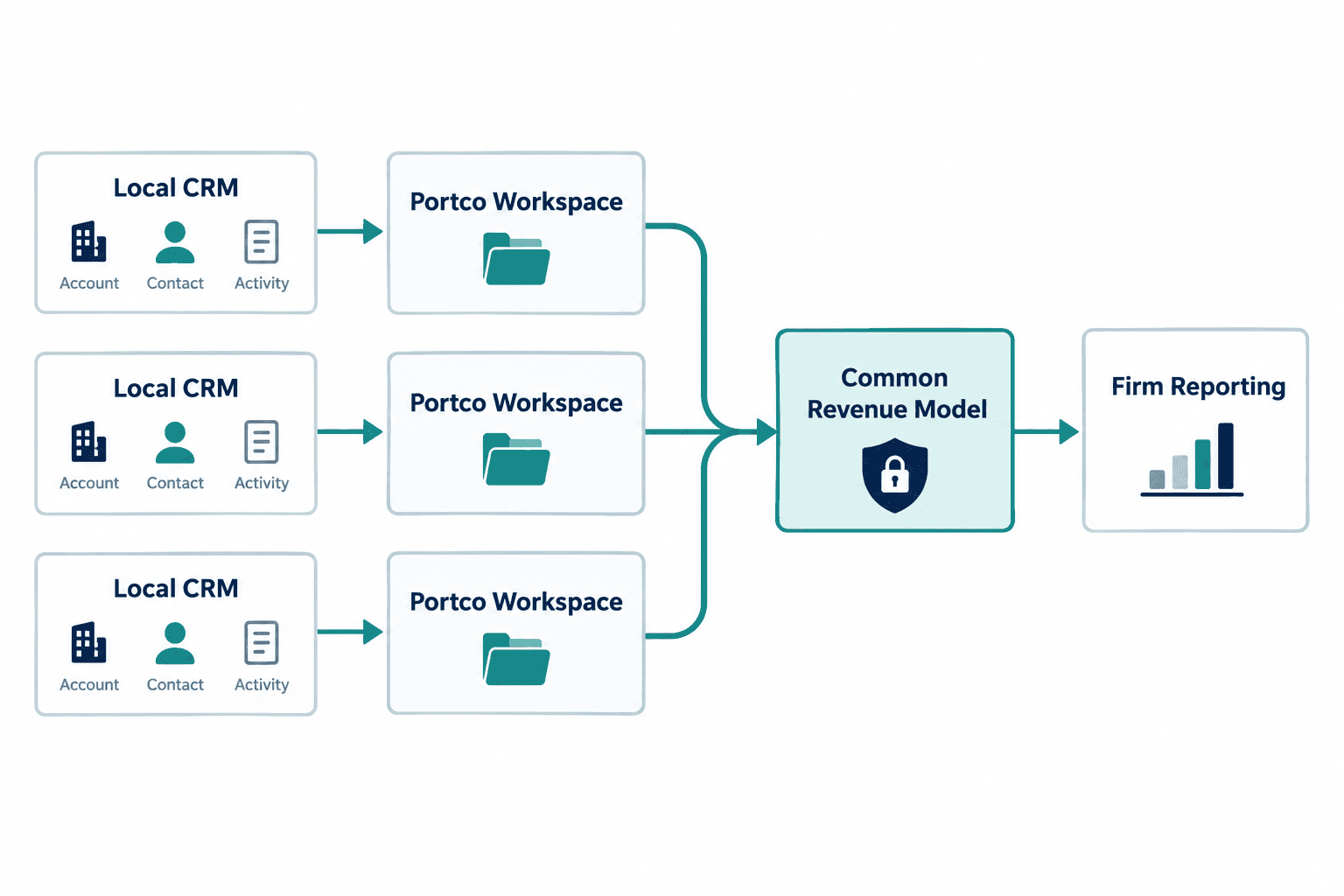
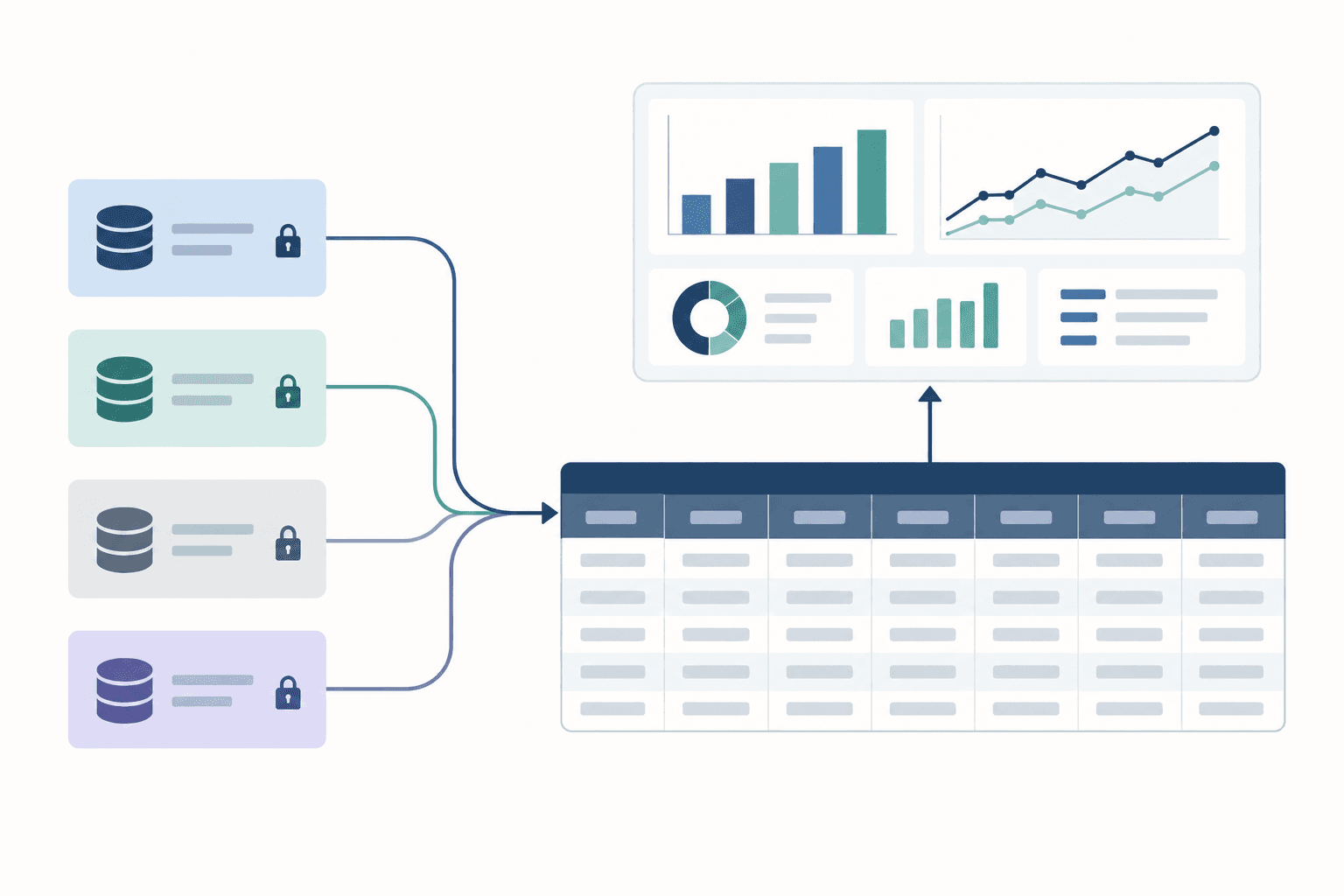
GenieCRM is GTM Engine's intelligence layer for private equity portfolios. It sits on top of each portco's existing CRM rather than replacing it, maps relevant revenue data into a common data model, and rolls that up to a firm-level view. Each portco keeps its own workspace and its own permissions, so the firm gets comparable visibility without taking over the portco's day-to-day system.
The relationship problem in this article is where that design matters most. As new calls and emails come in, GenieCRM updates the related account, opportunity and contact records, which addresses the slow decay behind the champion-without-a-deal and stale-activity errors. The firm's operating and analyst teams can then build reports and repeatable plays against a shared model instead of reconciling five spreadsheets.
Be clear about the limits. GenieCRM does not make portcos agree on what an account is, and it does not merge shared contacts across companies or authorize cross-portco outreach. Activity GTM Engine never sees (an offline conversation, a hallway agreement) still needs a manual note.
The fit caveat is straightforward. If your portcos will not agree on shared definitions or maintain reliable source records, fix that first. Automation applied to undefined relationships just keeps the wrong links current faster.
A reliable rollup is a governance decision before it is a software decision
Software choices are reversible. A quarter of operating decisions made on miscounted pipeline is not.
Tie it back to Northwind. The duplicate opportunity, the misrouted call and the orphaned champion each took a rep seconds to create. Each changed what the operating partner concluded about that portco's coverage, momentum and pipeline. None was visible from the firm level, and none would have been fixed by a nicer dashboard.
The prospect staring at 38,000 company records asked the question that belongs in every portfolio operating review: "Is that even right? Like am I do I trust that information?" If your current answer depends on which portco built the report, the relationship model is the gap, and the CRM is not.
Your next step: pick one portco and one open opportunity worth more than its quarterly average. Trace it from the firm-level report back to the account, the contact roles and the last three activities. If any link is missing or wrong, you have your first standard to write. Then ask your GTM Engine contact for a GenieCRM walkthrough using that same opportunity as the test case.
Frequently Asked Questions
What is the best CRM for private equity portfolio pipeline reporting?
No single CRM wins for every portfolio. Tools such as DealCloud and Affinity focus on the fund's deal flow and relationships, while portcos run their own sales CRMs. For operating pipeline reporting, the better test is whether each portco can map accounts, parent links, contact roles, opportunities and stages to a shared definition.
Are CRM and pipeline the same?
No. A CRM is the system that stores accounts, contacts, opportunities and activities and the relationships between them. A pipeline is a view of opportunities moving through defined sales stages. The pipeline is only as accurate as the CRM relationships it is built from.
Do all portfolio companies need to use the same CRM for a pipeline rollup?
No. A rollup can draw from different CRMs if each portco maps its records to the same relationship model and stage definitions. Forcing a single CRM introduces migration and adoption risk that frequently damages data quality during the transition.
Can a PE firm merge contacts that appear in more than one portfolio company?
Recording the overlap for analysis is reasonable. Merging those records or using one portco's relationship for another portco's outreach is a separate decision that depends on each company's data agreements, permissions and customer commitments.
How often should a portfolio pipeline rollup be validated?
Validate before every operating review that uses the numbers, and after every add-on acquisition, since tuck-ins introduce new account hierarchies and duplicates. A sample of the ten largest open opportunities per portco is a practical starting check for whether the rollup is fit for use.